
Russia with China, Israel with the US — two nations convinced that survival means making their allies swallow bitter pills, until dialectics lead them to the fait accompli of polarization.
Alexander Dugin, often described as the Kremlin’s ideologue, declares: “War is ahead of us.”
In his worldview, Russia holds a comparative advantage over China: its nuclear arsenal, vast territory, historical identity, and above all, its capacity to “conceptualize world processes”.
For him, a global confrontation is inevitable — one that will engulf China, India, the Middle East, Africa, and Latin America in a brutal polarization between unipolarity and multipolarity.
But this reasoning rests on a fragile assumption: that Beijing will obediently follow Moscow into such a confrontation. Nothing could be less certain. China moves according to its own strategic logics, where economy, social stability, and historical continuity weigh far more heavily than any adventurous war.
The most striking point, however, lies elsewhere: in the parallel between Russia and Israel.
Each believes it relies on a providential tutor — Moscow on Beijing, Jerusalem on Washington. Each overestimates the loyalty of this protector, and both indulge in the same illusion: believing that their survival depends on their ability to make their supposed steadfast allies swallow bitter pills, again and again, as if resilience were synonymous with submission.
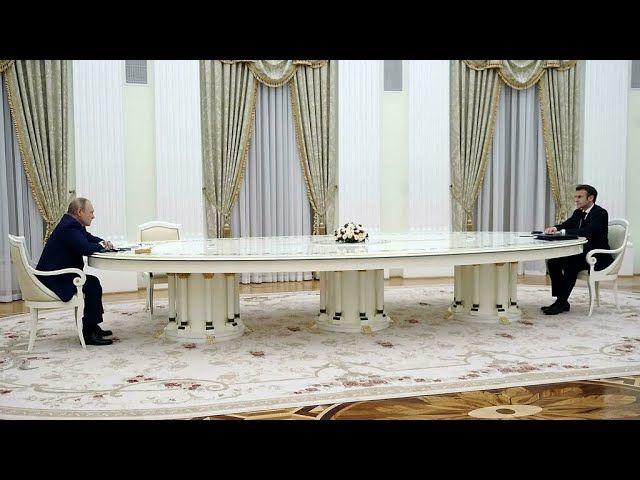
Russia behaves as if Xi Jinping’s GGI proposal were not on the “grand table”. Yet Moscow has never truly known what a great table is, despite the paranoid dimensions of the Kremlin’s own piece of furniture meant to intimidate visiting leaders.
Meanwhile, the Israelis are waking up in shock: Donald Trump signed an agreement with Qatar under which any attack on Qatar would be treated as an attack on the United States.

 En attendant la Renaissance